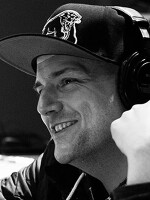
"All-American Ghetto" is the debut album from Indiana rapper, musician, and writer Foosie. The record draws on his life — from growing up in Indianapolis to serving a 20-year prison sentence.
You may have seen Foosie on "The Kelly Clarkson Show," where he spoke about that journey, and the role the Indiana Prison Writers Workshop played in helping him find his voice.
Foosie recently sat down with WFYI's Kyle Long to talk about his work.
This transcript has been edited for style and clarity.
Kyle Long: Foosie, I do want to talk about your debut album, "All-American Ghetto." This album was inspired by the events of your life — the bad and the good. That includes a 20-year prison sentence you served.
Foosie: 20 years and nine months.
Long: What do you want to share with our audience about that, and the circumstances that led to the creation of this album, All-American Ghetto?
Foosie: "All-American Ghetto" is about all of the jerseys that didn’t get framed, all the unknown names, all the stories that didn’t get told.
We all have people in our lives who mean the world to us that the world would never know, but in our minds and our hearts and our spirits, they deserve a plaque on the wall or a Medal of Honor. We grew up with people who were given so much, but yet they didn’t become what they could have become.
We also might have seen people who didn’t have much grow up to be something. In a family, in their lineage, they might have been the first person to stop drinking or the first person to graduate college. All those people are All-American ghetto.
Long: Tell me about your entry point into writing. From what I understand, this happened during that 20-year sentence you served. You were part of the Indiana Prison Writers Workshop. Tell me about how you got so deeply into writing.
Foosie: Yeah, the Indiana Prison Writers Workshop, started by, I always call her my creative writing professor, Debra Des Vignes. We just went on "The Kelly Clarkson Show" yesterday. For that program, she was chosen as a "Rad Human," and then they had me come out there and talk about, somewhat, how the program helped me or benefited me. I read a poem from the book, they flew me out to New York to do that.
That came from way back when I was first in the county jail. There was a guy in the block I was in who was rapping, and he was just doing everyday rap, talking about the things going on in his life — and he was good. I was just like, “Well, maybe I can talk about my story. Like, I actually lived this. I actually did this.” Then I started rapping, beating on the bunk and rapping.
So writing just helped me make sense of everything that I’ve been through, and even some of the joy and all the things that I experience now too. At first, I didn’t think that I was ever going to be able to write music after I came out of the joint. People were like, “Why not?” I was like, “I ain’t going to be in pain anymore.” So pain is not the only factor for me to write. I write what I can’t not write.
Long: As you look back on this workshop and how it influenced you and other students in the program, what would you tell people about the importance of having programs like this?
Foosie: Not just in prison, but anywhere somebody is volunteering to give of themselves and give their time to help people add to their soul’s progression — that right there is valuable.
Of course, you want people to be paid their worth, too. So it’s like, I hope those people also end up getting paid and are able to make a living off helping people live. Anything like that, anything involving the arts, gives life value.