-
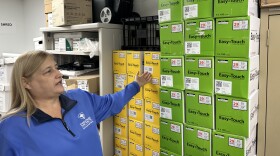 Clark County's syringe services program has to follow new requirements, as part of a state law passed this year. Health officials say they're committed to doing what it takes to maintain the program.
 -
 Advocates gathered at the statehouse to pushback on a bill that would criminalize homelessness. They say lawmakers are writing legislation that impacts them without a seat at the table.
 -
 An Indiana House committee advanced an amended bill this week that would extend syringe services programs by two years. Some advocates say requirements in the amendment would weaken programs.
 -
 Six Indiana counties operate a syringe service program, often acting as a bridge to healthcare, overdose prevention education and addiction treatment. But the programs could end in July, when the law allowing them expires.
 -
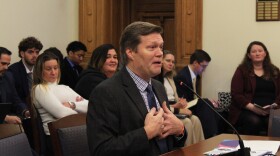 Lawmakers heard testimony on Wednesday about the importance of needle exchange programs, which give people access to clean syringes for drug use. Data show those programs have helped slow the spread of disease and protect law enforcement, but not everyone is in favor of an extension.
 -
 The city of Austin has begun laying the groundwork for a new syringe service program (SSP) before the local, county-run SSP sunsets at the end of the year.
 -
 Scott County's needle exchange program has been credited with slowing the severe HIV outbreak that rocked the rural county in 2015, and is now seen as the national benchmark for how similar programs should operate. It will stop operating Jan. 1, 2022.
 -
 Syringe service programs, also called needle exchanges, provide intravenous drug users with clean needles and a place to dispose of used ones.
 -
The Madison County commissioners approved the exchange's renewal for two years on a 2-1 vote Tuesday after only one resident voice opposition during a public hearing.
-
 Commissioners in Madison County have failed to extend the county's needle exchange, halting local efforts to prevent the spread of diseases among intravenous drug users by providing them with clean needles.

© 2026 | Privacy Policy
Play Live Radio
Next Up:
0:00
0:00
Available On Air Stations


