The Indianapolis mayor's office announced earlier this year it would expand its Youth Violence Reduction Initiative in an attempt to address gun violence among those 17 and younger. The city partnered with multiple non-profits that centered on serving youth, including VOICES Corp., New B.O.Y., Inner Beauty and Vantage Point.
Another local group, the Boys & Girls Clubs of Indianapolis, has been working with kids for decades to offer safe spaces during critical hours after school and in the summer. The group wants parents, guardians and students to understand its mission and how it aligns with the city's plan to help students stay safe.
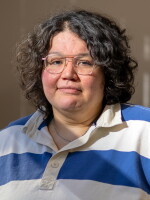
WFYI's Barb Anguiano sat down with Director of Development Pam Lozano to learn more. Lozano started by talking about their role in the fight against youth-involved violence.
This transcript was edited for style and clarity.
Pam Lozano: What people don't understand about what we do at the Boys and Girls Clubs is that we're not a daycare.
We're not just an out of school, aftercare program. We are mentors. We're a resource for the whole family, and I think where we sit is right in the center and the core of a resource-like hub.
We are a part of the solution, and we have been for years. We're one of the oldest nonprofits organizations in the city, and people still don't know the full scope of what we do and how we're really focused on making sure we serve the kids. From kindergarten, we want to keep them in the clubs until they're 18, and they're young adults, and they have a life plan.
At the Boys and Girls Club, our goal isn't to just keep [kids] safe for [a certain] amount of time, or give them something to do. We want to see how their life changes.
That's really the heart and the core of what it is that we're doing, and how we're trying to be a part of [not only] how we're looking at what's happening with teens, but also really what's not being offered to them. How no one's really truly listening to them.
I feel like the big crux of it is: has anyone who is putting, you know, solutions out there really asked the teens, "What do you want to do? What do we need to do? What can we offer? What are we not giving you to help alleviate what are situations they don't even want to be in?
Barb Anguiano: Was there anything that the club maybe was doing differently this year than in previous years?
Lozano: I think honestly, it was intentional partnerships and relationships. I think what we have noticed is that for teens in particular, they are really invested in specific things, and we really want to make sure that we're amplifying their voice.
So, for example, at our Wheeler Dowe Club, we have a STEM coordinator. She was super intentional about the programs and the experiences that they got to have.
A lot of those kids at that club were, I mean, indoor skydiving and learning the physics behind it, and it's so funny to trick them into learning. I think that those are the kind of groundbreaking opportunities and experiences that honestly we don't traditionally get to have every day.
They're not something that we even get to do every summer. This one was special, and those kids getting to do something like that was huge. But also kind of sets the stage for what we're going to be doing moving forward and how we're going to keep those kids at the club.
Anguiano: How are you guys preparing to go into the next school year?
Lozano: I think we are taking what is being put in the news, what conversations we're having with partners or with IMPD, or you know, city officials, [and] taking all of that and trying to continue to figure out, how do we get a step ahead? So that we're not just doing the same things.
Obviously, consistency is great because you know kids really do need consistency, but for us, it's thinking a couple steps ahead. How do we navigate what we know could be times and spaces where not all kids are getting after school opportunities.
I think getting ahead and thinking about where we were and where we want to go is the constant conversation bringing the teens to the table and really letting them guide us.
I think that's been the shift, and I think that's that's really helped us in understanding. We can't do anything if we don't know what it is that we're doing, and we don't know what we're doing if we're not having conversations with the kids we serve.
Contact WFYI Morning Edition newscaster and reporter Barbara Anguiano at banguiano@wfyi.org