-
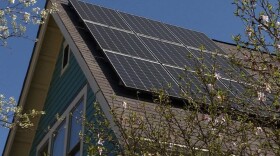 President Donald Trump's One Big Beautiful Bill ends the 30 percent tax credit for residential solar installations and equipment in 2026. Solar panels have to be fully installed and operating by the end of December to get the tax credit.
 -
 Lower-income Hoosiers are more likely to live in older, less energy-efficient homes that use more power. Advocates say putting solar on these homes lowers their energy bills and reduces the need for more power plants — which all electric utility customers pay for.
 -
 Nearly half of all the solar installed in Indiana came online last year, mostly from the state's utilities. According to the American Clean Power Association, Indiana also made big waves in clean energy during the first quarter of this year.
 -
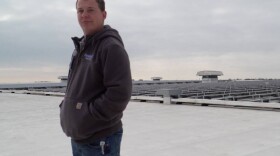 Indiana is expected to add a lot of solar power in the next five years — roughly equal to more than five Hoover Dams. Most of that will be on the ground — something some rural Hoosiers don't like. There could be another option — put solar on hundreds of millions of square feet of unused space on top of big box stores and warehouses.
 -
 There’s so much wind and solar energy being proposed in the U.S. that there’s not enough power lines to get that energy where it needs to go. Building out that new transmission is expensive — it’s one of the things causing Indiana utilities to raise customers’ electric bills right now.
 -
 Indiana nonprofits are unsure if — or how — some climate-friendly grants will move forward. President Trump’s executive order freezing funding from the Inflation Reduction Act and the bipartisan infrastructure law — as well as the lawsuits pushing back — have created a lot of uncertainty.
 -
 A new report shows Indiana has a lot of land space for solar and renewable energy projects.
 -
 New federal funding will allow for the development of low-income solar programs throughout the state.
 -
 Nationwide, solar accounted for more than half of all the new energy that came online in 2023. Though a good portion of that could have been held over from 2022.
 -
 A state law says counties with wind or solar ordinances that are more restrictive than state guidelines can't access state incentives. But a new state House bill, HB 1278, would let counties that nearly meet the guidelines get them too.

© 2026 | Privacy Policy
Play Live Radio
Next Up:
0:00
0:00
Available On Air Stations


