 DONATE




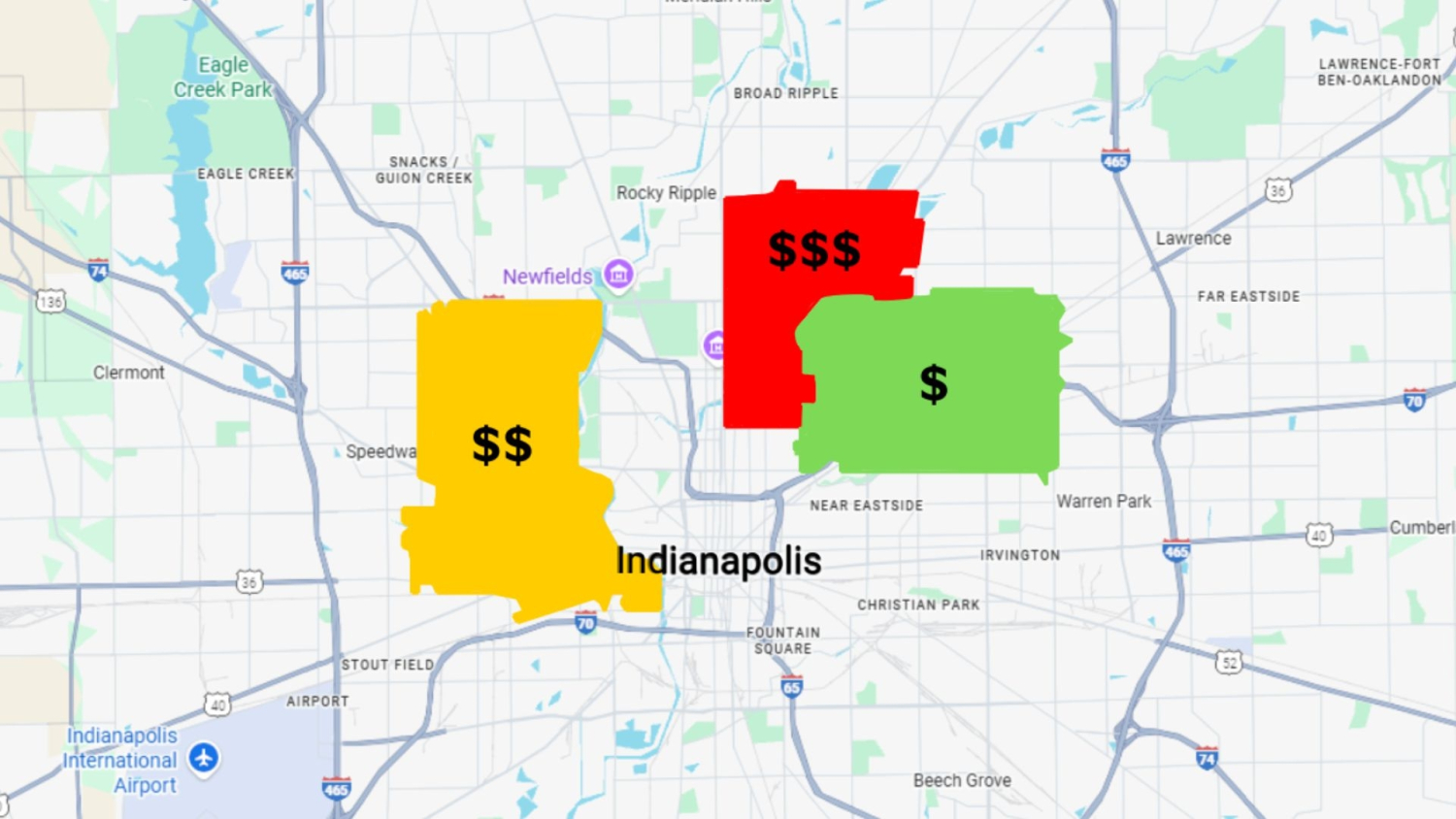
The differences between high-cost and low-cost areas highlight the uneven nature of the Indianapolis' housing market.
Illustration by Zach Bundy / WFYIIndianapolis neighborhood data shows significant variations in housing costs, highlighting stark disparities in accessibility for buyers, renters and homeowners. The city's ZIP codes reflect a diverse landscape where location heavily influences affordability and quality of life.
The average home value in Indianapolis as of May 2025 was $233,611, a 1.9% increase over the past year, according to Zillow. Redfin reports a median sale price of $257,000, up 2.8% from the previous year.
While these averages suggest a stable housing market overall, they obscure the dramatic differences across neighborhoods.
Housing prices by ZIP code
Recent data highlights substantial disparities in median home prices by ZIP code, revealing the challenges many residents face:
-
46205 (Near Eastside)
Rocket Homes reports a median sale price of $306,416 in May 2025, up 5.1% from the previous year. Smaller homes in this area have seen the steepest increases. For instance, one-bedroom homes surged 67% to $175,500, while two-bedroom homes climbed 8.2% to $230,000.
-
46222 (Southwest Indianapolis)
Realtor.com lists the median home price at $159,900, marking a 10.3% increase from the previous year. This area remains more affordable but is seeing steady price growth, indicating growing demand.
-
46218 (North Indianapolis)
This ZIP code has one of the lowest median home prices at $127,500, despite a 9% increase from last year.
The differences between high-cost and low-cost areas highlight the uneven nature of the city's housing market. Residents in higher-priced areas face larger financial barriers, while those in more affordable neighborhoods often encounter fewer amenities or older housing stock.
The impact on buyers
For first-time homebuyers, affordability is a key concern. Lower-cost neighborhoods such as 46218 offer an entry point into the market, but the trade-offs may include older homes or limited community resources.
Higher-cost neighborhoods like 46205 provide better access to amenities and potentially higher long-term property value, but they require significantly larger financial commitments.
According to the National Association of Realtors, buyers in Indianapolis are increasingly looking for homes in mid-priced neighborhoods as rising costs push entry-level housing out of reach.
The impact on renters
The ripple effects of rising home prices are also felt by renters. Increased property values lead to higher rents, often forcing long-term residents to relocate.
The National Low Income Housing Coalition reports that renters in Indianapolis spend, on average, more than 30% of their income on housing — a key threshold for affordability.
This situation disproportionately affects lower-income families, who face limited options for safe and stable housing. Without intervention, rising rents could exacerbate housing insecurity in vulnerable communities.
The impact on homeowners
For current homeowners, rising property values can be a double-edged sword. While increased equity benefits those looking to sell, higher valuations often result in higher property taxes, which can strain household budgets, particularly for residents on fixed incomes.
Broader implications
The disparities in housing costs reflect broader challenges within Indianapolis' urban development. Rising home prices in certain neighborhoods often lead to gentrification, displacing long-term residents and altering the cultural fabric of communities.
Conversely, lower-cost areas provide opportunities for development and investment but may lack the necessary resources to sustain growth. Addressing these disparities requires coordinated efforts from policymakers, developers and community organizations to ensure equitable access to housing.
Local housing advocates, such as the Indianapolis Neighborhood Housing Partnership (INHP), are stepping in to bridge the gap. INHP offers down payment assistance, financial education, and support for affordable housing development.
Additionally, the city's Department of Metropolitan Development has implemented initiatives aimed at increasing housing options in high-demand areas while preserving affordability.
Moving forward
Understanding the complexities of Indianapolis' housing market requires examining these disparities by ZIP code. The uneven affordability landscape affects where residents can live, how neighborhoods evolve, and who can remain in their communities as the city grows.
As housing costs rise, Indianapolis faces a choice: to prioritize policies that promote equitable access to safe and affordable housing or risk further deepening the divide between high- and low-cost areas. Policymakers, developers and community leaders must collaborate to create solutions that balance growth with inclusivity.
This article used data from Zillow, Redfin, Rocket Homes, Realtor.com and the National Low Income Housing Coalition.
Email Indianapolis Recorder Health & Environmental Reporter Hanna Rauworth at hannar@indyrecorder.com or contact her at 317-762-7854.







 Support WFYI. We can't do it without you.