 DONATE




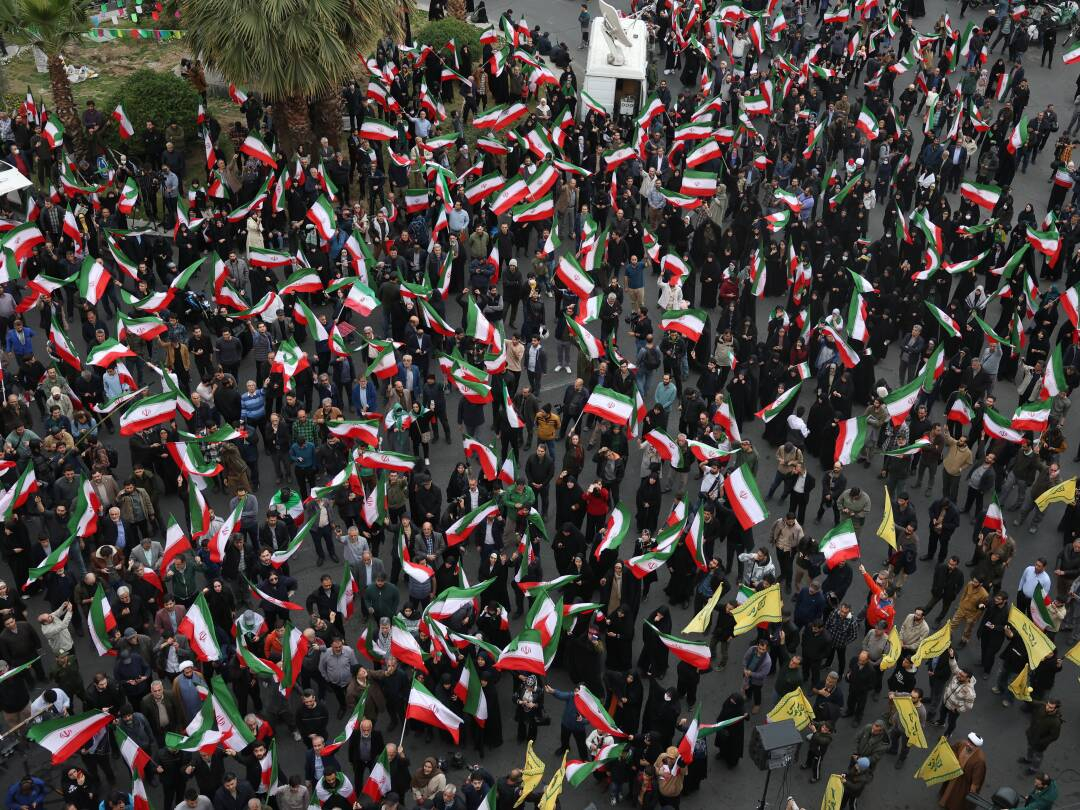
Demonstrators wave Iranian flags in a demonstration in support of the government and against U.S. and Israeli strikes in Tehran, Iran, Saturday, Feb. 28, 2026.
AP Photo / Vahid SalemiHoosiers should expect gas prices to go up as fighting in the Persian Gulf continues.
After a joint attack from the U.S. and Israel killed Iran's supreme leader and other top officials, President Donald Trump said Monday strikes are targeting Iran's military and preventing the country from obtaining nuclear weapons.
While the war continues, Hussein Banai, an associate professor at Indiana University Hamilton Lugar School of Global and International Studies, said Indiana will see the economic fallout.
The price of oil is already climbing, NPR reported.
"That means the rise in prices across the board, because transportation costs will go up," Banai said. "People are going to feel the price hike not only at the pump, but also in supermarkets as well."
NPR reported stock markets were down Monday morning, and inflation could increase.
Across the country, some Iranian-Americans celebrated the death of Iran's supreme leader and hoped for new leadership, NPR reported. This year alone, Iranian leaders cracked down harshly on protesters, killing thousands and facing accusations of human rights violations.
Banai said Iranian-Americans in Indiana are also supportive of regime change. But he said it's not clear if or how the U.S. military will pursue that.
"No one is going to be upset about[the regime]being gone," Banai said. "The question here is, what are the ultimate objectives that the United States wants to pursue?"
Trump had promised "no new wars" and had been outspoken against foreign military conflict. Despite these campaign points, Banai said Trump chose to attack Iran. At the same time, he said the U.S. military's goals are unclear.
Trump also did not consult Congress before the attack, citing an "imminent threat." It's not the first time the administration has bypassed legislators' approval to commit an act of war and prompted concerns over violating the Constitution and the War Powers Act.
As the war in Iran continues and the midterm election creeps closer, Banai said it's possible politicians on both sides of the aisle could push back against Trump.
"There's plenty to go after with the president and his political party, to say that they've basically done the opposite of what they promised to do during the campaign," Banai said. "But I think there are also a lot of considerations here in terms of how this war plays out."







 Support WFYI. We can't do it without you.