 DONATE






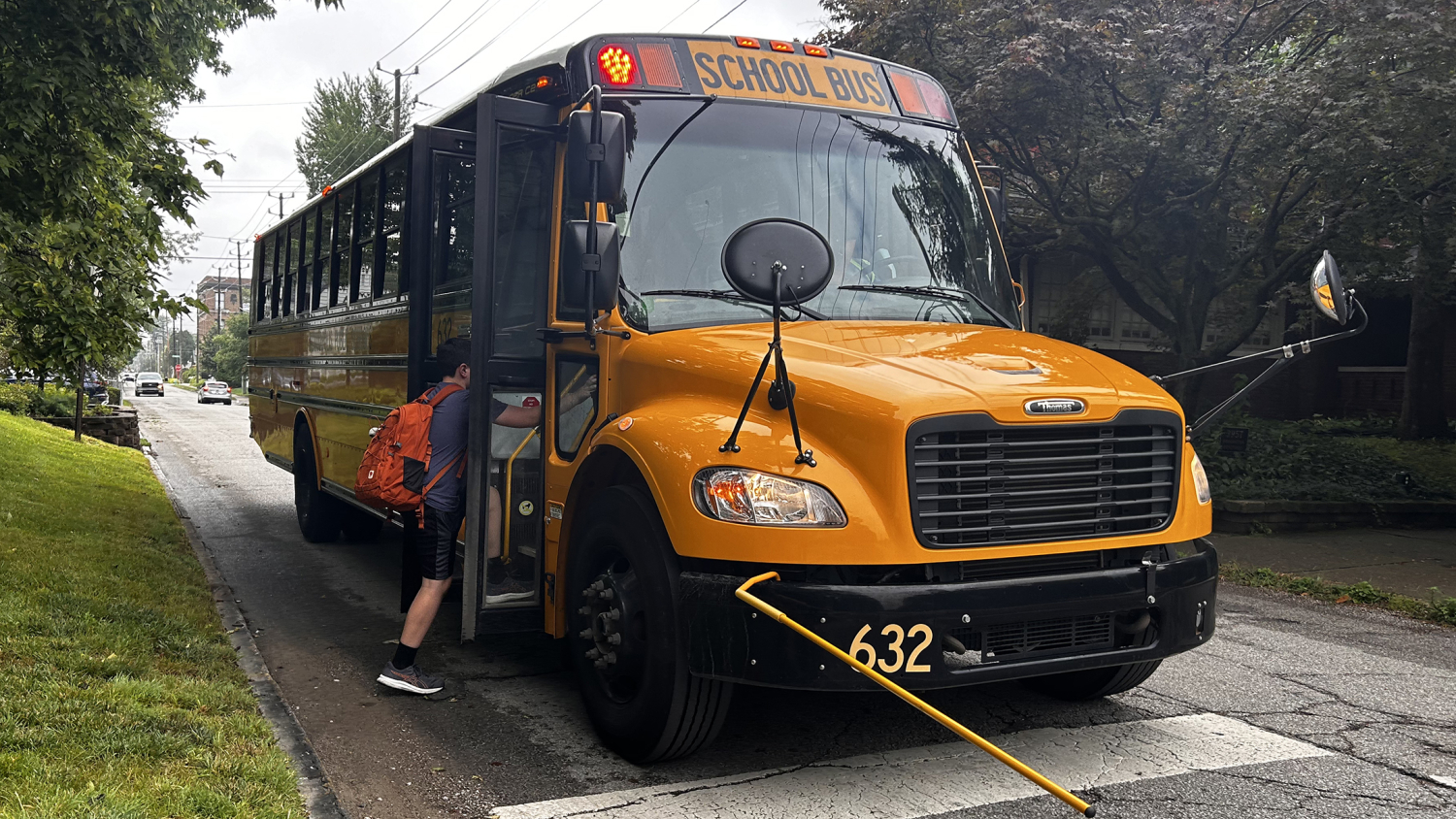
The legislation will create a bus system for all Indianapolis district and charter schools.
Eric Weddle / WFYIThis story was published Feb. 24, 2026; Updated Feb. 25, 3:20 p.m.
The Indiana House on Wednesday passed a sweeping measure that creates a new municipal oversight body for Indianapolis schools and shifts major financial and facility powers away from the locally elected board. The bill will soon move to Gov. Mike Braun for signature.
House Bill 1423 establishes the Indianapolis Public Education Corporation, a nine-member board appointed by the mayor to oversee a unified transportation, facility and school performance system for nearly 43,000 students. Individual district and charter schools will retain control over the hiring of educators and staff, as well as academic curriculum. In a late change, school leaders can also opt out of IPEC taking control of their facilities.
The legislative path for HB 1423 originated in early 2025 when lawmakers established the Indianapolis Local Education Alliance. The state-mandated task force, chaired by Mayor Joe Hogsett and including IPS Superintendent Aleesia Johnson, voted 8-1 in December to recommend the new oversight body to address fragmented resources.
However, the bill faced sharp criticism during debate. Democrats expressed frustration over its rapid advancement, arguing it singles out IPS while other districts face similar fiscal challenges. Sen. Faddy Qaddoura (D-Indianapolis) accused the bill authors of attempting to provide leverage to charter schools over IPS.
"I join my colleagues in supporting parental choice,” he said. “What I don’t support is funding one choice at the expense of another."
Sen. Jeff Raatz (R-Richmond), who sponsored the bill, refuted those claims and claimed IPS had made mistakes that required the legislature to take action.
“This is not a game or some unnecessary exercise. People have taken painstaking time, at no pay, to come up with this plan,” he said Tuesday. “And there were plenty of people involved in it. Is it perfect? I'm sure not, but it's a pathway forward.”
On Wednesday, Johnson pushed back against narratives of district mismanagement, pointing instead to a decade of state policy decisions.
"The fact of the matter is there are state policy decisions that have happened over the last decade that have put IPS and a number of public school districts in a really fiscally constrained space," Johnson told WFYI. She cited property tax reform, a shift toward how state funding is calculated and a $24 million gap in special education funding.
Johnson also highlighted the district's record high graduation rates and I-READ scores exceeded state growth.
“We are the one district in the state who have partnered with charter schools and done so very robustly,” Johnson said, adding the effort was “applauded a decade ago and now seems to be a point of criticism.”
School choice advocacy groups The Mind Trust and Stand For Children praised passage of the legislation in statements. Both groups have urged the district to partner and share resources with charter schools.
The bill passed the Senate 27-21 and received final House approval with a 67-30 vote.
Conflict continues
Current Indianapolis Public Schools board members have warned the move dilutes the power of elected officials. Critics, including district families, characterized the plan as "taxation without representation," noting that the new corporation board will have the authority to tax levies starting this year.
But school choice advocates and some local families argue the bill is necessary to ensure equitable funding and access to transportation students who attend independent charter schools. Around 11,000 students are enrolled in charter schools within the district boundaries that are not affiliated with IPS.
Raatz said that the General Assembly should “never apologize for giving parents the choice where they want to send their students.” He characterized the shift in enrollment away from traditional IPS schools as a result of families seeking the best options for their children.
If the bill is signed into law, the Indianapolis Public Education Corporation is expected to seek a property-tax referendum on the November general election ballot that would fund IPS and charter schools.
The district faces a fiscal cliff due to the end of a property tax referendum in 2026 that brought in at least $43 million in additional revenue during recent years.
What’s next for Indianapolis Public Education Corporation
If the legislation is signed by the governor, Mayor Joe Hogsett has until March 31 to appoint the nine-member board, including three leaders of charter schools, three IPS board members and three experts in logistics or community work.
The corporation faces a number of deadlines:
- March 31, 2026: the corporation assumes the powers of IPS regarding budgets, tax rates and tax levies.
- August 1, 2026: Submit a report detailing progress on creating the single school performance framework, including processes to close chronically low performing schools and buildings found to be inefficient.
- November 30, 2026: Feasibility study regarding the best approach for managing school property and unified transportation plan.
- 2028-2029 school year: the corporation will control the management and operation of all school property within IPS boundaries; a unified transportation plan for all participating schools.
- The legislation also narrows who can grant or renew charters for schools located in the district boundaries to three entities: the Indiana Charter School Board, the Indianapolis mayor’s office and the IPS board. Charter schools authorized by other entities prior to April 1, 2026 may continue operating under their current authorizer until their charter term expires or is terminated. After that point, the schools must seek renewal from the three authorizers.
Contact Government Reporter Caroline Beck at cbeck@wfyi.org.
Eric Weddle is WFYI's education editor. Contact Eric at eweddle@wfyi.org or follow him on X at @ericweddle.








 Support WFYI. We can't do it without you.